
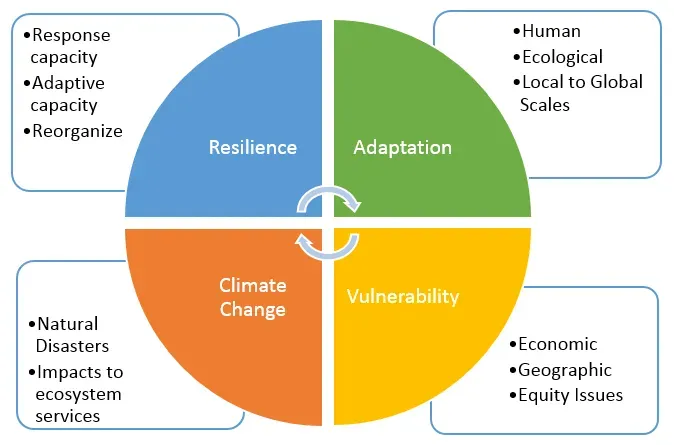
Climate resilience for businesses is essential in today’s volatile environment, where climate-related shocks can threaten cash flow, reputation, and growth. Building this resilience requires proactive governance, clear risk signals, and practical actions that protect operations, supply chains, and customer trust. A strong approach blends governance with risk assessment for climate-related disruptions and emphasizes ongoing monitoring, scenario planning, and disciplined budgeting. Embedding resilience into strategy supports corporate climate risk management, business continuity planning in climate change, and climate adaptation strategies for enterprises. Ultimately, resilience and sustainability in business go hand in hand, delivering long-term value and strengthening stakeholder confidence.
Taken together, this topic can be reframed as enterprise resilience to climate risk, where robust governance and adaptive planning safeguard operations. A broader lens encompasses organizational preparedness, supply chain continuity, and the integration of environmental risk considerations into budgeting and strategy. By focusing on risk signaling, scenario analysis, and preventive investments, businesses strengthen their ability to withstand extreme weather, policy shifts, and energy price swings. In practice, this means aligning sustainability goals with performance metrics, ensuring stakeholders understand how resilience builds value, and adopting a proactive stance toward disruption readiness.
Climate resilience for businesses: Governance, risk management, and continuity in a changing climate
Leading organizations recognize that resilience is a strategic capability, not an optional add-on. Establishing governance that treats climate risk as a core business issue unlocks the resources and accountability needed to embed resilience in planning, budgeting, and decision making. This is the essence of corporate climate risk management: a living process of data-enabled insights, scenario planning, and continuous monitoring that reveals where exposures could cascade across operations, finances, and reputation.
Effective resilience also requires robust business continuity planning in climate change contexts. Plans must cover not only IT recovery but supply chains, manufacturing, and critical talent, with defined roles and clear communication during disruptions. A disciplined approach to risk assessment for climate-related disruptions helps leadership prioritize mitigations, track recovery time objectives, and preserve customer trust even when weather or policy shocks occur.
Resilience and sustainability in business: Climate adaptation strategies for enterprises and proactive risk assessment
To translate resilience into measurable value, enterprises pursue climate adaptation strategies for enterprises that strengthen both physical assets and organizational capability. Upgrades to flood defenses, energy-efficient facilities, distributed generation, nearshoring and dual sourcing reduce exposure while supporting resilience and sustainability in business. Integrating data analytics, weather feeds, and supplier telemetry turns adaptation from a one-off project into an ongoing capability that informs budgeting and strategic planning.
Beyond operations, governance and metrics ensure resilience remains a living capability. A culture of preparedness, rigorous risk assessment for climate-related disruptions, and clear accountability help translate resilience investments into durable competitive advantage. By embedding resilience into governance frameworks and daily decision making, organizations can sustain performance, protect margins, and build stakeholder confidence in the face of climate risk.
Frequently Asked Questions
What is climate resilience for businesses and how does it connect to corporate climate risk management?
Climate resilience for businesses is a strategic capability that protects value, sustains operations, and strengthens stakeholder confidence amid rising climate risk. To build it, leadership should treat resilience as a core business issue and implement corporate climate risk management: map exposures, run scenario planning, monitor risk continuously, and align resilience initiatives with budgeting and strategy. When governance champions resilience, firms improve supply chain continuity, protect customer experience, and create long-term value through disciplined action.
What practical steps support business continuity planning in climate change and advance resilience and sustainability in business?
Practical steps include starting with a risk assessment for climate-related disruptions to map critical processes and climate exposures; develop a playbook for business continuity planning in climate change, covering roles, communication, and recovery steps; invest in diversified and resilient supply chains, physical and asset resilience, workforce readiness, and data protection; implement governance and dashboards with resilience metrics; and rehearse plans through drills. These measures align with climate adaptation strategies for enterprises and support resilience and sustainability in business.
| Aspect | Key Points | Notes / Examples |
|---|---|---|
| What climate resilience is | Strategic capability that protects value, sustains operations, and strengthens stakeholder confidence in the face of climate risk. | Embedded in governance and decision-making; supports opportunities in a changing world. |
| Understanding climate risk | Physical risks (floods, droughts, heat) and transition risks (policy changes, carbon pricing, demand shifts). Requires ongoing mapping, scenario planning, and agile monitoring. | Not a one-off exercise; adapts to new information. |
| Governance foundation | Leadership owns climate risk as a business issue; establish a risk management framework; align resilience with strategy; allocate resources for analytics, supplier diversification, and workforce readiness. | Boards integrate resilience into budgeting and planning. |
| Resilience in planning and operations | Resilience planning across supply chain, manufacturing, and people; include clear roles and communication. | Maintains critical functions, protects customer experience and brand trust. |
| Strategy 1: Risk assessment & scenario planning | Heat maps of processes/facilities/suppliers; climate projections produce multiple scenarios; quantify losses and set risk-reduction targets. | Backbone of climate risk management; informs mitigations and KPIs. |
| Strategy 2: Diversified and resilient supply chains | Diversify suppliers, nearshoring where feasible, dual sourcing; map second/third-tier suppliers; assess supplier climate exposure. | Creates alternative pathways to keep production flowing during disruptions. |
| Strategy 3: Physical and asset resilience | Infrastructure resilience (flood defences, HVAC upgrades, roof protection, backup power); climate-resilient data centers and facilities; energy efficiency and distributed generation. | Reduces exposure and operating costs; improves resilience to price volatility. |
| Strategy 4: Workforce readiness and culture | Training, drills, playbooks; clear roles; resilience metrics in dashboards; recognize adaptive teams. | People are central to rapid recovery and performance. |
| Strategy 5: Financial resilience and risk transfer | Integrate climate risk into financial planning; reallocate capital; build reserves; consider insurance for weather-related losses. | Focus on stabilizing cash flow, not building a fortress. |
| Strategy 6: Data, analytics, and cyber resilience | Data governance, cyber incident response, and protected backups; ingest weather/grid/supply data for proactive signaling. | Enables faster, informed decision making. |
| Strategy 7: Governance, metrics, and accountability | Embed resilience metrics in dashboards; track time to recover, supplier disruption rates, inventory buffers, disruption costs; regular reviews by leadership. | Turns insights into action and sustains momentum. |
| Implementation path | Iterative approach: resilience assessment, playbook, rehearsals; phased plan: Discover/Map, Decide/Design, Deploy/Monitor, Learn/Adapt. | Aligned with business continuity frameworks; tested through drills. |
| Measuring success | Key indicators: time to restore operations, % of suppliers with resilience plans, inventory coverage during events, cost of disruptions relative to revenue. | Shows return on resilience investments over time. |
| Practical example | Illustrates how a mid-sized manufacturer improved resilience via supplier diversification, dual sourcing, buffer stock, on-site power, weather monitoring, staff training, and data analytics. | Demonstrates end-to-end application and outcomes. |
Summary
Climate resilience for businesses is essential to navigating a volatile, climate-impacted future. Through robust risk assessment and scenario planning, diversified supply chains, resilient infrastructure, and a culture of preparedness, organizations can reduce exposure to climate-related disruptions, protect their customers, and seize opportunities as the world changes. The path to resilience is practical and measurable, grounded in governance, data, and disciplined execution. By embracing climate resilience for businesses today, you invest in a more resilient tomorrow for your people, your operations, and your bottom line.

