
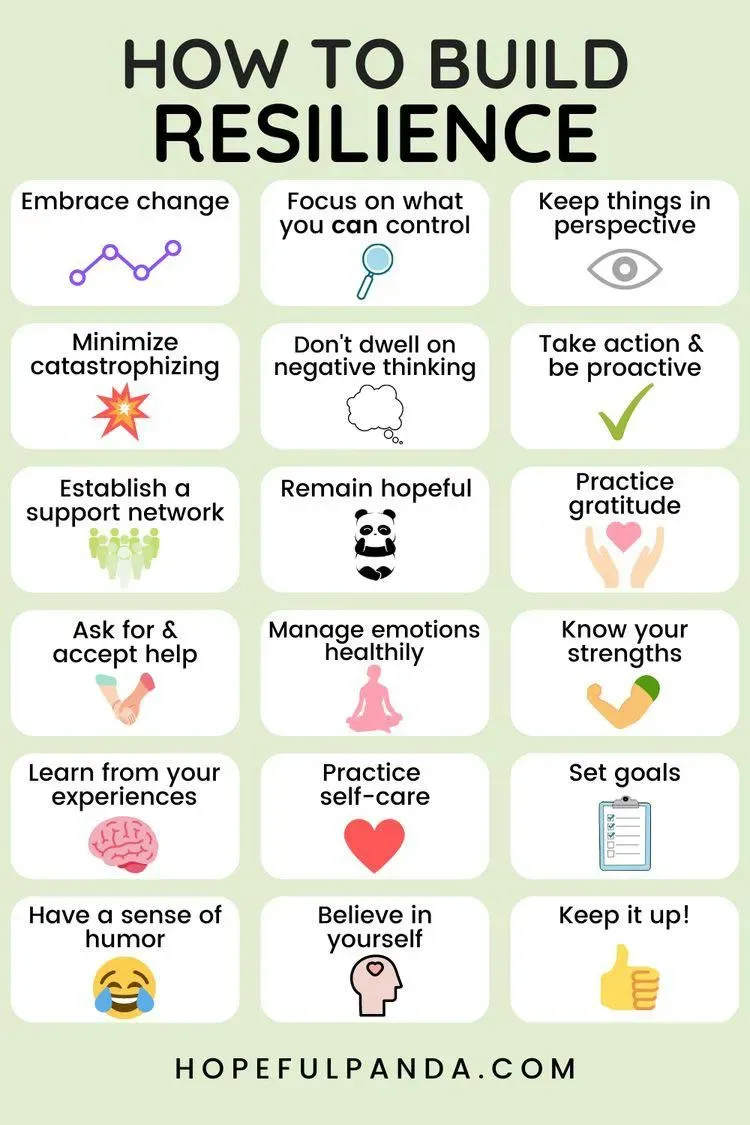
Resilient life skills empower you to navigate constant change with confidence, transforming uncertainty into opportunities for steady progress, practical momentum, and personal growth for long-term wellbeing and career success. By cultivating these abilities, you reinforce emotional resilience, lock in stress management techniques that calm the body and mind, and sharpen adaptability in tough times so you can pivot without panic through deliberate practice and reflective learning. You’ll also develop problem solving skills that move from vague worry to structured action—defining the problem, generating options, evaluating trade-offs, and choosing a course of action with clarity in real-world settings. Alongside that, coping strategies for adversity become habitual, including social support, deliberate breaks, and reframing thoughts to sustain motivation when external conditions grow unpredictable. This introductory overview sets the stage for practical steps, micro-habits, and measurement ideas you can start today to build a resilient toolkit that supports your ambitions across all areas of life.
Beyond the exact phrase, the topic can be framed as building psychological durability and adaptive capacity for everyday and extraordinary challenges. Think of it as nurturing emotional regulation, routine-based resilience, and practical know-how that keep you effective under pressure. From an LSI perspective, related strands such as resilience-building habits, stress tolerance, flexible planning, and resourcefulness form a cohesive cluster that supports sustained performance when plans shift. Using alternative terms helps readers connect with familiar concepts while recognizing how these ideas reinforce each other—from mood management to decision agility. Together, these terms map to a web-friendly overview that mirrors how search engines associate interconnected ideas, guiding learners to the core materials with varied vocabulary.
Resilient life skills: Building emotional resilience and problem-solving capacity during adversity
Resilient life skills are a practical toolkit for navigating uncertainty. By cultivating emotional resilience, you reduce reactivity and maintain perspective when setbacks arrive. Stress management techniques, such as controlled breathing, short mindful breaks, and movement, lower the physiological pull of pressure, freeing cognitive bandwidth for thoughtful decisions. When these foundations pair with strong problem-solving skills, you shift from crisis mode to deliberate action, enabling you to respond calmly while keeping your goals in sight.
Developing mastery across these pillars also strengthens your coping strategies for adversity. Adaptability in tough times becomes less about chasing a perfect plan and more about generating viable alternatives, testing them with small experiments, and learning from feedback. The result is a resilient set of habits, including consistent routines, reflective journaling, and a mindset that treats challenges as opportunities to grow rather than threats to your identity.
Adaptability in tough times: Pathways to coping strategies for adversity and efficient problem solving
Adaptability in tough times is not merely bending with the wind; it’s a practiced discipline of reframing challenges, planning contingencies, and recalibrating goals as information changes. You can train this skill by maintaining flexible plans, seeking diverse feedback, and listing two alternative approaches for major decisions. This proactive stance makes coping strategies for adversity more accessible, helping you preserve energy for high-impact actions and maintain momentum when external conditions shift.
Effective problem solving skills provide structure amid disruption. Use a simple framework: define the problem, brainstorm options, evaluate trade-offs, decide, and review results. Applying this cycle daily or weekly builds cognitive agility and confidence. Pair problem solving with resilience rituals, such as brief mood checks, gratitude practices, and social support, to sustain motivation when stress spikes. The outcome is a sustainable, descriptive plan that makes tough times more navigable and accelerates progress toward your goals.
Frequently Asked Questions
What are resilient life skills, and how do emotional resilience and stress management techniques contribute to them?
Resilient life skills are a set of abilities that help you bounce back from setbacks, cope with stress, and adapt to changing circumstances without losing sight of your goals. Emotional resilience strengthens your ability to regulate emotions, stay calm, and maintain perspective when challenges arise. Stress management techniques—such as controlled breathing, mindful awareness, and purposeful movement—protect mental energy and reduce physiological arousal. Together, these elements build a foundation for adaptability in tough times, sharpen problem solving skills, and support effective coping strategies for adversity.
What practical steps can I take to develop adaptability in tough times as part of resilient life skills?
Developing adaptability in tough times starts with small, repeatable habits and a practical problem-solving mindset. Reframe setbacks as data to inform next steps, and prepare two alternative approaches (plan A and plan B). Use a simple problem-solving framework: define the problem, generate options, evaluate trade-offs, decide, and review results. Strengthen coping strategies for adversity by leaning on social support, ensuring rest, and reflecting through journaling, while tracking progress to stay motivated. These steps bolster problem solving skills and enhance overall resilience in the face of adversity.
| Topic | Key Points | Notes/Examples |
|---|---|---|
| What are resilient life skills? | Set of abilities to bounce back from setbacks, cope with stress, and adapt to changing circumstances; not about denying difficulty; blend of mindset, behavior, and routines; enable sustained performance under pressure; growing through crises when cultivated. | Foundational concept |
| The impact on daily life | Reduces overwhelm during crises, improves decisions under pressure, and speeds recovery after setbacks; benefits include stronger emotional resilience, better stress management, and reliable problem solving; increases focus, motivation, and sense of control under uncertainty. | |
| Core components | Emotional resilience; Stress management techniques; Adaptability in tough times; Problem solving skills; Coping strategies for adversity. These pillars reinforce one another (e.g., resilience supports stress management, freeing cognitive resources for problem solving and adaptability). | |
| Quick-start plan: where to begin | Begin with one pillar for 21 days, track progress, couple daily micro-habits with weekly reflection; aim for consistency over perfection; plan can be tailored to life. | |
| The five pillars in detail | 1) Emotional resilience — regulate emotions, stay clear-headed. 2) Stress management techniques — breathing, movement, mindfulness. 3) Adaptability in tough times — adjust goals/methods. 4) Problem solving skills — define problems, generate options, evaluate, decide. 5) Coping strategies for adversity — social support, reframing thoughts, recovery time. | Pillars reinforce one another; interrelated foundations. |
| Practical plan to develop resilient life skills | 90-day goal; 3×30-day sprints focusing on one or two pillars; daily system with morning breathwork/mindfulness and planning, daytime stress checks and quick problem-solving cycles, evening reflection; progress tracked via habit tracker and weekly reflection. | |
| Tools, models, and resources | Mental models (growth mindset, first-principles thinking, probabilistic thinking); time management (effort–impact matrix); social support; reflection routines (journaling). | |
| Real-world application and examples | Maya’s story: used emotional resilience to reduce panic, stress management to maintain sleep and focus, adaptability to rewrite her career plan, and problem solving to pursue freelancing, leading to a new role after three months; another family used structured problem solving to coordinate care and maintain routine stability. | |
| Measuring progress and staying motivated | Calmer reactions under stress; more deliberate decision-making; faster recovery from setbacks; measurable indicators: reduced stress reactivity, higher task completion, clearer outcomes; regular check-ins with a coach, mentor, or accountable friend. |
Summary
Conclusion paragraph would go here.

